Finding a scorched tree in your yard can leave you wondering whether it will bounce back or become a hazard. A few charred branches don’t always signal the end, but some damaged trees can fail after developing problems that are hard to spot. If you are already thinking about tree removal in San Jose, it helps to understand your options first.
In this guide, Zazueta Tree Specialists discusses tree removal after fire damage.
Can a Scorched Tree Still Survive?
Fire-damaged trees don’t always need removal, but survival depends on the extent and location of the damage. A tree with singed leaves but healthy tissue beneath its bark may have a better shot than one burned around the trunk.
Longer, hotter fires cause deeper harm, and young, thin-barked trees have less protection. A tree that was already stressed before the fire often struggles more. A fire-damaged tree assessment can show whether it might recover or whether removing it is the safer option.
A careful check looks at these areas:
- Bark: Charred outer bark is not a death sentence if the layers beneath stay alive.
- Cambium: If the tree is stable and safe to approach, a professional may examine a small area of cambium for green, moist tissue and document changes over time.
- Canopy: Scorched leaves may drop, yet new growth can still follow.
- Buds: Plump, green buds suggest the tree is preparing to rebound.
- Roots: Smoldering fires can burn shallow roots, so look for charring near the base.
Ask the arborist how often the structure should be monitored. Tree recovery and regrowth may take weeks or months, and a specimen that looks lifeless now could still sprout buds when the growing season returns. Follow-up visits can identify delayed decline before weakened limbs or roots create new hazards around your property.
Changes in leaf color, bark condition, canopy density, or soil position can reveal whether the tree is stabilizing or declining, giving the arborist useful information during each scheduled follow-up.
Which Post-Fire Conditions Make a Tree Dangerous?
Only some post-fire tree hazards are visible. Burned roots may remain hidden below the soil, while weakened branch unions may be difficult to detect.
An expert may recommend tree removal after fire damage if they notice:
- Severe leaning: A new or worsening lean may indicate compromised roots or internal damage.
- Trunk cracks: Deep splits can weaken the trunk and increase its risk of failure.
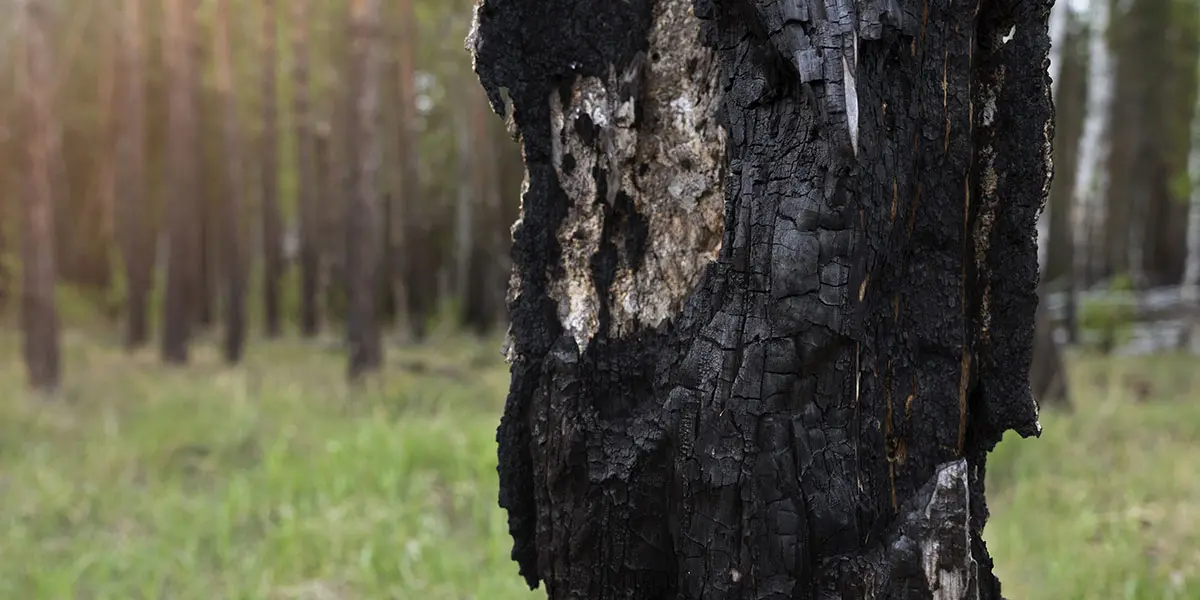
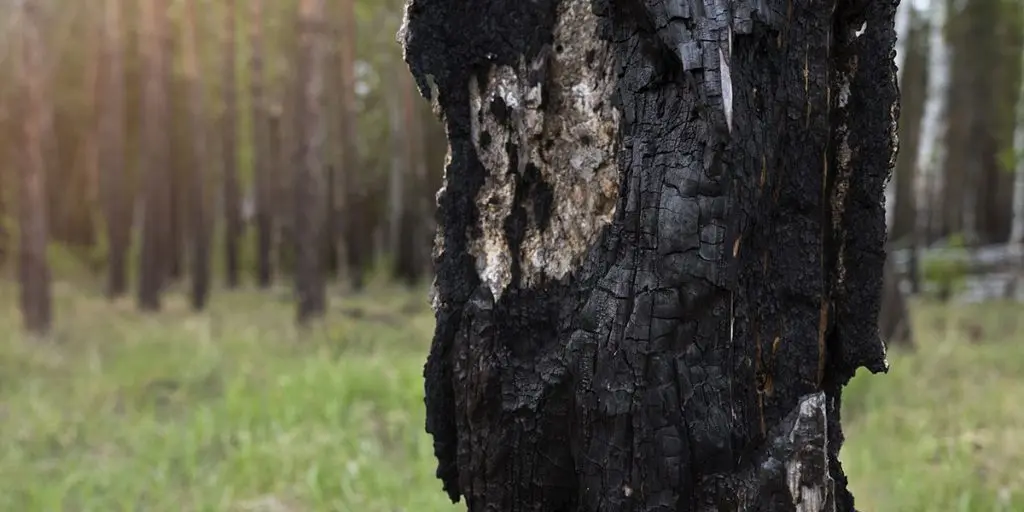
- Heavy charring: Fire that encircles much of the trunk may damage the living tissue beneath the bark.
- Soil movement: Raised or cracked soil may indicate that the root plate is shifting.
With any size of tree, structural damage is a problem. An upright tree with internal damage can fail during severe weather or under the weight of damaged branches.
Until someone inspects the tree, keep people and vehicles well away. If it sits near your house or a utility line, the safest route is to work with a tree-removal professional.
When Is Removal Necessary, and When Can a Tree Recover?
When do professionals recommend tree removal after fire damage? This recommendation is typical when the tree is unstable or unlikely to recover. Ultimately, the decision will weigh safety against recovery potential and the tree’s location.
When Cutting Is the Safer Choice
Hazardous tree removal becomes the priority when a failing specimen threatens people or property, such as when it could fall on a roof. With a burned tree removal, the crew may dismantle and lower small sections to protect nearby structures and landscaping. They can then haul away the debris and advise on whether you should have the stump ground out.
Caring for Trees That Are Worth Keeping
Trees with healthy tissue may still recover. If an arborist confirms dead wood in an otherwise healthy tree, selective pruning can remove hazardous branches and boost growth. Careful watering and mulch support the roots, while regular checkups help catch new problems.
Count on Zazueta Tree Specialists After the Flames Fade
Fire damage does not always doom a tree, but dead or structurally unstable ones may warrant removal. Our team provides careful assessments and safe removals. You can also read our guidance on recovering from heat stress, including how to safely support your affected trees.
Need a tree removal after fire damage in San Jose, CA, or the surrounding Bay Area? Call Zazueta Tree Specialists at (408) 603-3577. Our founder, Carlos Zazueta, is a licensed California contractor who works alongside our crew on job sites across Santa Clara County.